




How the Children of Svoboda Honor Their Heroes
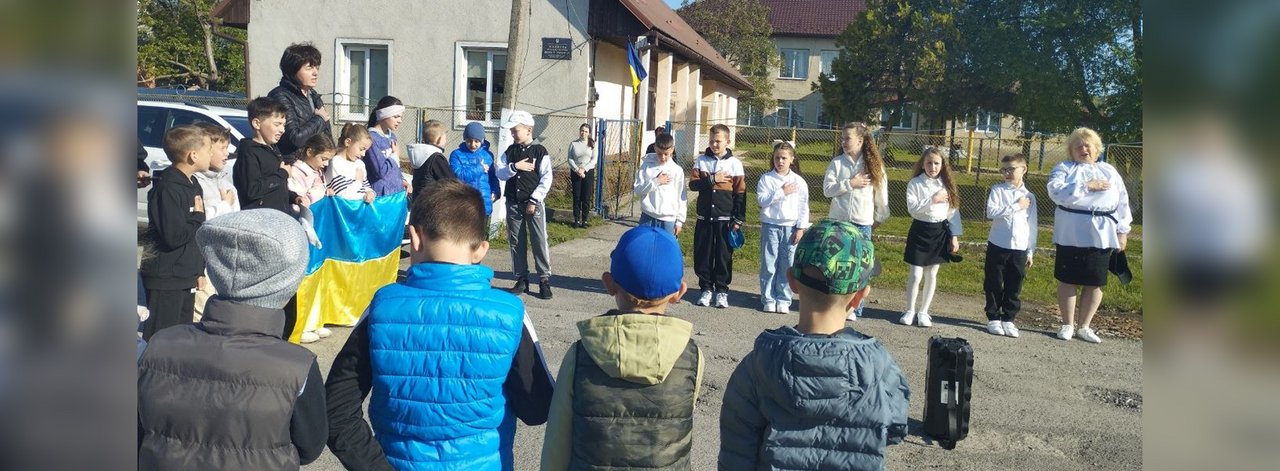
In the village of Svoboda, within the Bativska territorial community, the morning air isn’t just filled with the sounds of nature or the hum of starting engines. Every day at 9:00 AM, a profound stillness takes over. It is a moment where time stops, not by chance, but through the deliberate, heartfelt actions of the local youth.
For these students, the National Minute of Silence is not just a formal requirement; it is a sacred ritual of gratitude.
More Than Just Sixty Seconds
When asked to complete the sentence, "A minute of silence for me is...", the junior school students’ responses reveal a level of maturity and emotional depth that reflects the reality of growing up in a country at war:
"An opportunity to remember everyone who died from the war: military, volunteers, doctors, children, and adults."
"To pay tribute to those who died for Ukraine."
"To honor those who gave their lives so that we could live, study, and grow up at home in our native country."
These aren't just words; they are the values of a generation that understands the true cost of their education and their safety.
A Stand for Remembrance
The tribute in Svoboda goes beyond the classroom walls. Led by their convictions, the students take to the streets. In a powerful display of civic duty, they physically stop traffic on the local road, bringing movement to a halt. By stopping the flow of cars, they ensure that the entire community pauses. It is a visual and spiritual reminder that while life goes on, it does so only because of the sacrifice of those at the front. For those sixty seconds, the road—usually a symbol of rushing toward the future—becomes a space for reflection on the past and the people who secured that future.
Why It Matters
In psychology and sociology, collective rituals like this serve two vital purposes:
Preservation of Memory: It prevents the names and deeds of heroes from fading into the background of daily chores.
Community Cohesion: It unites different generations—students, drivers, and passersby—in a shared moment of grief and pride.
The children of Svoboda are teaching us a vital lesson: Honor is an active verb. It is something we do, something we stand for, and occasionally, something we are willing to stop the world for.
"They gave their lives so we could live at home." As these young Ukrainians stand on the road in Svoboda, they aren't just honoring the dead; they are promising the living that their sacrifice will never be forgotten. They are the guardians of our national memory, proving that even the smallest village can hold the largest heart.